
Pinmi
Get a Quote
Pinmi
August 2026 · 8 min read
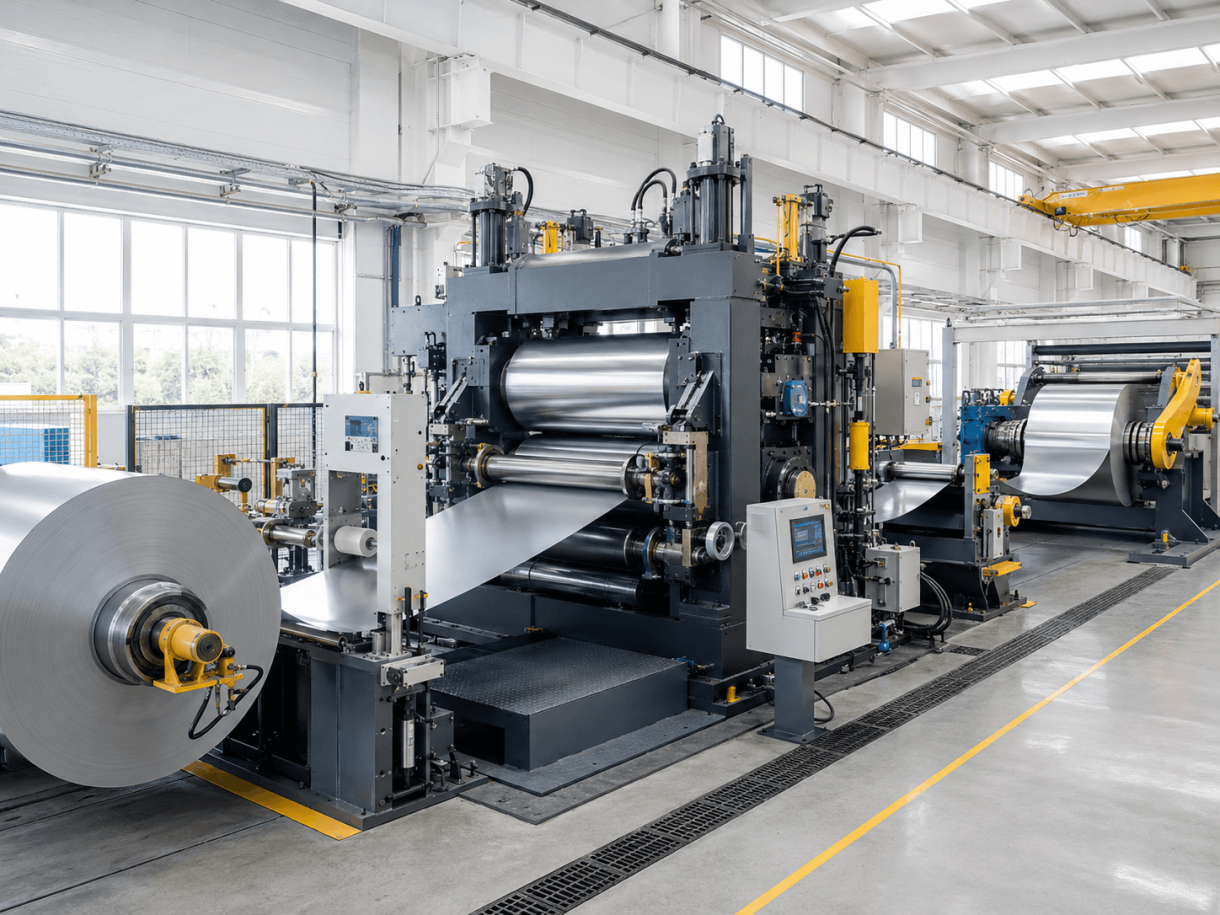
The production line is running, the rolls are turning, and finished coils are leaving the mill. On paper, everything appears normal.
Then the inspection report arrives.
Thickness varies across the strip. The edges are wavy. Scratches appear on the surface. The coil tension is unstable. Operators reduce the speed to maintain acceptable quality, and production output begins to fall.
These problems do not always mean that the cold rolling machine is defective. They may result from an incorrect machine configuration, worn rolls, unstable tension, unsuitable lubrication, inaccurate alignment, inconsistent incoming material, or a control system that cannot respond quickly enough to process changes.
Understanding the symptoms is the first step toward improving cold rolling quality—and making a better equipment investment.
A cold rolling machine reduces the thickness or changes the cross-sectional shape of metal at or near room temperature. The material passes between rotating rolls that apply controlled compressive force.
Cold rolling is commonly used to process:
Compared with hot rolling, cold rolling can produce tighter dimensional tolerances, a smoother surface, and improved mechanical properties through work hardening. However, these benefits depend on accurate control of rolling force, roll gap, strip tension, speed, lubrication, and material condition.
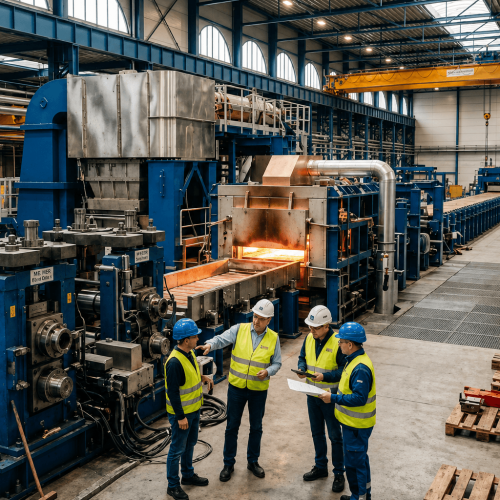
A cold rolling machine is therefore more than a set of powered rolls. It is a coordinated production system that may include an uncoiler, entry guide, leveler, rolling stand, lubrication system, thickness gauge, tension control, recoiler, hydraulic equipment, electrical cabinet, PLC, and HMI.
Thickness variation is one of the most common cold rolling problems.
The strip may be too thick at the beginning of a coil, gradually become thinner, or fluctuate throughout production. There may also be a difference between the center and edges.
Possible causes include:
When comparing equipment, buyers should not focus only on the minimum possible outlet thickness. They should ask how the machine maintains that thickness during continuous operation.
An advanced cold rolling machine may use automatic gauge control, hydraulic gap adjustment, real-time thickness measurement, and closed-loop feedback to correct deviations. The required level of automation depends on the product tolerance, production speed, strip width, and available budget.
A strip can meet its average thickness specification and still have poor flatness.
Common flatness defects include wavy edges, center buckles, quarter buckles, and camber. These problems occur when elongation is not uniform across the strip width.
The causes may include:
For wide or thin products, the relationship between work rolls and backup rolls is especially important. A 4Hi or 6Hi cold rolling machine can use smaller work rolls supported by larger backup rolls, helping control deflection while providing the force required for thickness reduction.
Depending on the application, roll bending, shifting, segmented cooling, or flatness measurement may be needed to maintain the required strip profile.
The machine supplier should evaluate the material width, thickness range, alloy, mechanical properties, and flatness requirement before recommending a mill configuration.
Cold-rolled products are frequently used in applications where appearance and surface quality matter. A small defect may cause an entire coil to be downgraded.
Surface problems can include:
Potential sources include dirty rolls, contaminated lubricant, damaged guides, metal particles, poor cleaning, inappropriate roll roughness, unstable strip tracking, or defects already present in the incoming material.
A clean machine layout and properly designed filtration system can be just as important as rolling force. Buyers should review the lubrication tank, pumps, filters, spray headers, piping arrangement, and maintenance access.
Roll material, hardness, surface finish, and grinding quality should also match the product. The ideal roll surface for precision copper strip may differ from that required for steel or aluminum.
A high-quality strip can still be damaged during recoiling.
If the exit tension is unstable or the strip does not track correctly, the finished coil may become loose, conical, telescoped, or uneven at the edges.
Typical causes include:
The payoff, rolling mill, and recoiler must operate as one synchronized line. Dancer rolls, tension meters, load cells, variable-frequency drives, and closed-loop controls can help maintain stable tension throughout the coil.
When evaluating a cold rolling machine, ask how tension is controlled during threading, acceleration, normal production, deceleration, and coil completion—not only at steady speed.
Cold rolling generates heat through deformation and friction. If heat is not effectively removed, the rolls expand and the lubricant loses performance.
This may lead to thickness drift, poor flatness, unstable friction, surface defects, and shorter roll life.
The cooling and lubrication system should provide:
Operating with more coolant is not always the answer. Spray distribution, pressure, temperature, lubricant concentration, and filtration quality must all be controlled.
A cold rolling machine may have a high rated speed but still deliver disappointing daily production.
Actual output is affected by:
For smaller batches and frequent product changes, a reversing mill may provide useful flexibility. The strip passes backward and forward through one rolling stand, with the roll gap adjusted for each pass.
For high-volume production of fewer specifications, a tandem mill with multiple stands can complete several reductions continuously and achieve higher productivity.
The best arrangement depends on the product mix, not simply the maximum line speed.
A reliable proposal starts with complete production data.
Before requesting a quotation, prepare:
A sample of the incoming material and finished-product specification can help the supplier design a more appropriate rolling schedule and machine configuration.
Common cold rolling configurations include:
The correct choice depends on the required rolling force, strip dimensions, material strength, final tolerance, surface specification, and production volume.
Selecting a more complex machine than necessary can increase investment and maintenance costs. Selecting an oversimplified mill can make the required quality impossible to achieve consistently.
Thickness variation, poor flatness, surface damage, unstable coils, and low output are usually connected. Adjusting one parameter without understanding the complete process may only move the problem to another part of the line.
The right cold rolling machine should be designed around the incoming material and finished product. Its rolling stand, rolls, drive system, tension control, lubrication, gauges, recoiler, automation, and safety systems must function together.
PINMI Group supports international buyers in evaluating metal-processing requirements and developing practical equipment configurations. Send us your material, width, entry and exit thickness, coil weight, tolerance, capacity, and utility conditions. With complete project information, our team can help you review the process and prepare a cold rolling machine solution suited to your production goals.
Company
August 2026 · 8 min read
Company
August 2026 · 8 min read
Company
August 2026 · 8 min read
Event
August 2026 · 7 min read

Share your capacity, raw material and site conditions — we'll come back with a process route, equipment selection and a turnkey path to production.


No.310–311 National Road, Quanshan District, Xuzhou City, China