
Pinmi
Get a Quote
Pinmi
August 2026 · 8 min read
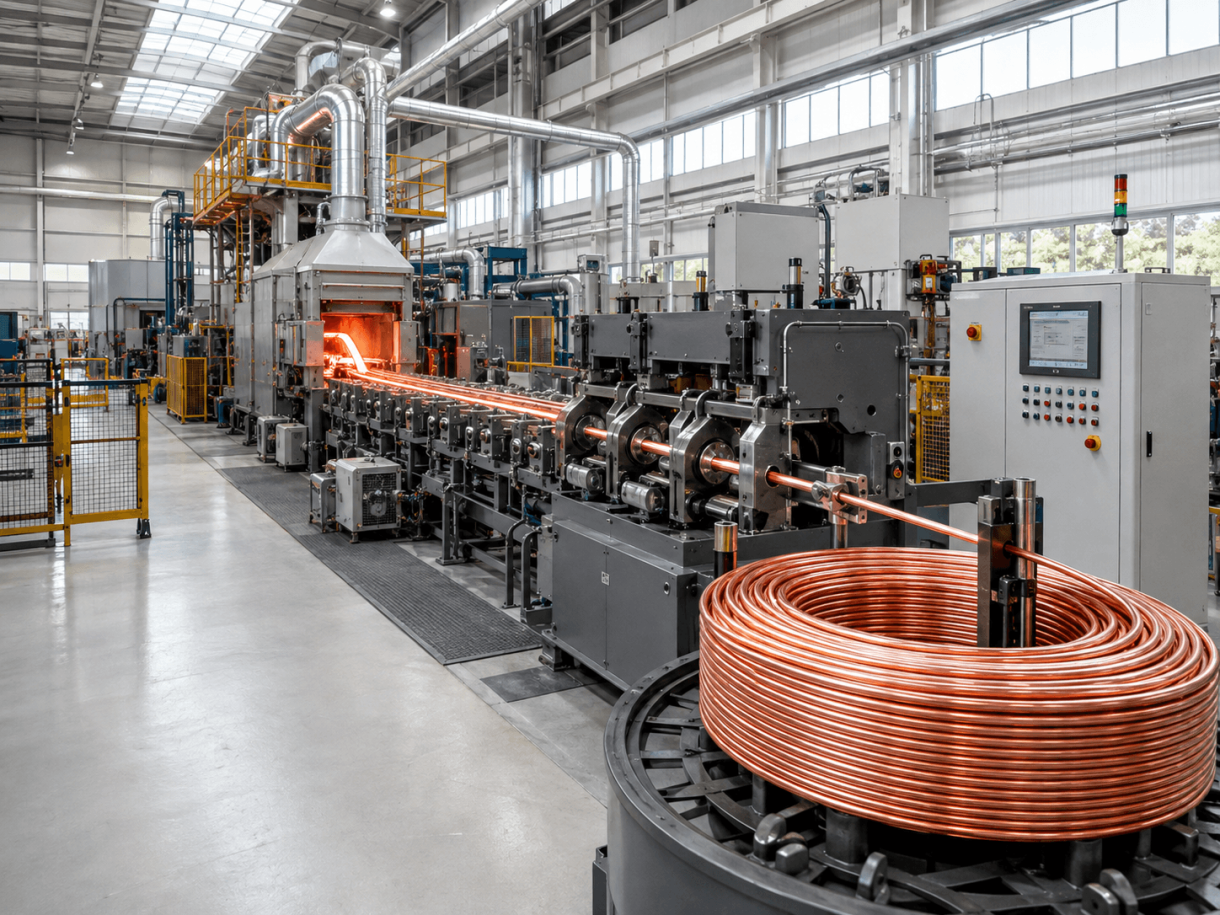
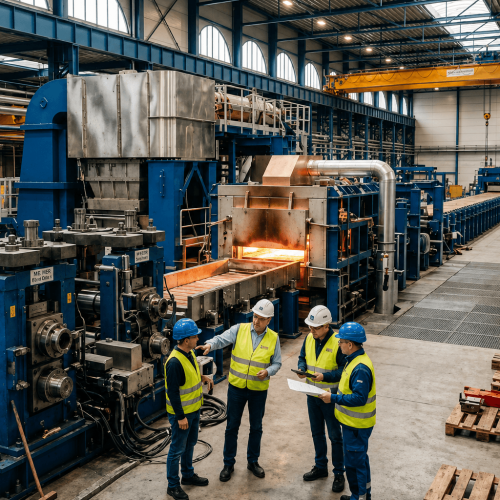
Efficient copper rod production begins with a stable, properly configured production line. For cable manufacturers, copper processors, and metal recycling companies, a copper CCR (continuous casting and rolling machine) provides an integrated method of converting molten copper into continuous copper rod.
Unlike a conventional batch process, a CCR line connects casting and rolling in one continuous operation. This reduces unnecessary material handling and reheating while supporting higher productivity, more consistent rod dimensions, and better process control.
A complete production line is a significant investment. Buyers should therefore understand its working process, principal components, raw-material requirements, production capacity, automation level, and technical support needs before selecting a supplier.
A copper CCR (continuous casting and rolling machine) is an integrated industrial line used to produce copper rod from molten copper. Depending on the equipment configuration and metallurgical process, cathode copper, clean copper scrap, or a controlled combination of suitable copper materials may be used as the feedstock.
The copper is first melted and refined. The molten metal then enters a continuous casting machine, where it is cooled and solidified into a continuous cast bar. Without being completely cooled and reheated in a separate batch process, the cast bar passes through preparation equipment and enters a multi-stand rolling mill.
Each rolling stand gradually reduces and reshapes the cast bar until it reaches the required rod diameter. The finished copper rod is subsequently cooled, cleaned, surface-treated when required, and collected in coils.
Low-oxygen copper rod with a nominal diameter of 8 mm is a common product of this process. However, the final specification depends on the line design, raw material, rolling configuration, and customer requirements.
Although the exact layout varies between projects, a typical copper CCR production process includes the following stages.
The selected raw material must be inspected before entering the furnace. Cathode copper should meet the required purity standard. When scrap copper is used, it must be appropriately sorted and controlled to prevent coatings, oil, insulation, alloy contamination, and other impurities from affecting the finished rod.
The consistency of the raw material strongly influences conductivity, oxygen content, surface quality, and downstream wire-drawing performance.
Copper is melted in a suitable furnace and then refined to control impurities and metallurgical quality. The furnace arrangement may differ according to whether the line uses cathode copper or copper scrap.
Molten copper is transferred through a controlled launder to the holding and casting sections. Stable metal temperature and flow are essential because variations can create porosity, cracks, oxidation, or an inconsistent cast structure.
The molten copper enters the casting wheel or another continuous casting system. Controlled cooling causes the metal to solidify into a continuous copper bar.
Cooling-water temperature, flow rate, casting speed, and molten-metal level must be coordinated. Uniform solidification helps create a dense cast structure and provides a stable starting material for continuous rolling.
Before rolling, the cast bar may pass through a haul-off unit, shear, straightener, edge shaver, deburring unit, or brushing equipment. These devices prepare the surface and geometry of the bar for safe entry into the rolling mill.
Removing burrs and surface irregularities at this stage helps reduce rolling defects and protects the downstream equipment.
The heated cast bar enters a series of rolling stands. Each stand progressively reduces its cross-sectional area and forms it into round copper rod.
Rolling speed, reduction ratio, roll alignment, lubrication, and cooling must be carefully coordinated. A stable rolling process supports consistent diameter, good surface finish, and reliable mechanical properties.
After rolling, the copper rod passes through a cooling and cleaning system. Surface treatment may also be applied to reduce oxidation and prepare the rod for storage or subsequent processing.
The finished rod is then formed into coils. A stable coiling system should produce orderly packages that are convenient to handle, transport, and feed into a rod breakdown or wire drawing machine.
A complete copper CCR (continuous casting and rolling machine) may include:
Buyers should examine the complete scope of supply when comparing quotations. A low initial price may exclude important auxiliary systems, installation materials, commissioning services, spare parts, or environmental equipment.
Integrating casting and rolling into one production line offers several potential benefits.
Continuous operation reduces intermediate handling and waiting time. When the furnace, casting machine, rolling mill, cooling section, and coiler operate in synchronization, the line can maintain stable output over long production periods.
The cast bar enters the rolling mill while it still retains useful process heat. This avoids or reduces the need for separate reheating compared with conventional billet-based production.
Automated control of temperature, casting speed, cooling, rolling speed, and coiling helps maintain consistent rod dimensions and surface quality. Stable copper rod makes subsequent wire drawing more reliable and can reduce wire breaks.
The integrated process transfers copper directly from molten metal to finished coil. This simplifies production flow and can reduce oxidation, handling damage, and work-in-process inventory.
Modern CCR lines can use PLC and HMI systems to monitor operating parameters, coordinate line speed, display alarms, record production data, and support fault diagnosis.
Copper rod produced by a CCR line is commonly used as the feedstock for:
Before selecting a production line, buyers should define the downstream product. Copper rod intended for fine wire drawing may require tighter control of conductivity, oxygen content, diameter, surface defects, inclusions, and mechanical properties.
Confirm whether the plant will process cathode copper, copper scrap, or both. The furnace and refining process must match the feedstock. Scrap quality should be clearly defined because contaminated material can reduce finished-product performance.
Production capacity affects furnace size, casting-wheel dimensions, rolling-mill configuration, cooling capacity, coiler design, electrical load, and factory layout. Buyers should select capacity according to realistic market demand rather than only the highest possible output.
Specify the required diameter, tolerance, conductivity, oxygen level, surface finish, coil weight, and applicable standard. These requirements allow the supplier to recommend the appropriate process and inspection equipment.
A CCR line requires a stable supply of electricity, water, fuel, compressed air, and cooling capacity. The buyer should also consider foundations, crane capacity, raw-material storage, finished-coil handling, ventilation, and environmental controls.
Evaluate PLC functions, HMI language, alarm history, interlocks, emergency stops, protective guards, temperature monitoring, and cooling-water protection. Safety and maintainability should be considered from the beginning of the project.
A copper CCR project requires more than equipment delivery. Installation supervision, commissioning, operator training, trial production, process adjustment, documentation, and spare-parts support are important for reaching stable commercial production.
When requesting a quotation, provide:
Complete project information helps the equipment supplier prepare a more accurate configuration, quotation, and plant layout.
A copper CCR (continuous casting and rolling machine) combines melting, continuous casting, rolling, cooling, and coiling into an efficient copper rod production process. Its performance depends not only on the rolling mill but also on raw-material control, furnace technology, casting stability, cooling, automation, and coordinated operation of the entire line.
PINMI Group works with international customers to evaluate production requirements and develop practical equipment solutions. If you are planning a new copper rod plant or upgrading an existing line, send us your raw material, required capacity, rod specification, utility conditions, and factory layout. Our team can help you review the project and prepare a tailored technical proposal.
Company
August 2026 · 8 min read
Company
August 2026 · 8 min read
Company
August 2026 · 8 min read
Event
August 2026 · 7 min read

Share your capacity, raw material and site conditions — we'll come back with a process route, equipment selection and a turnkey path to production.


No.310–311 National Road, Quanshan District, Xuzhou City, China