
Pinmi
Get a Quote
Pinmi
August 2026 · 8 min read
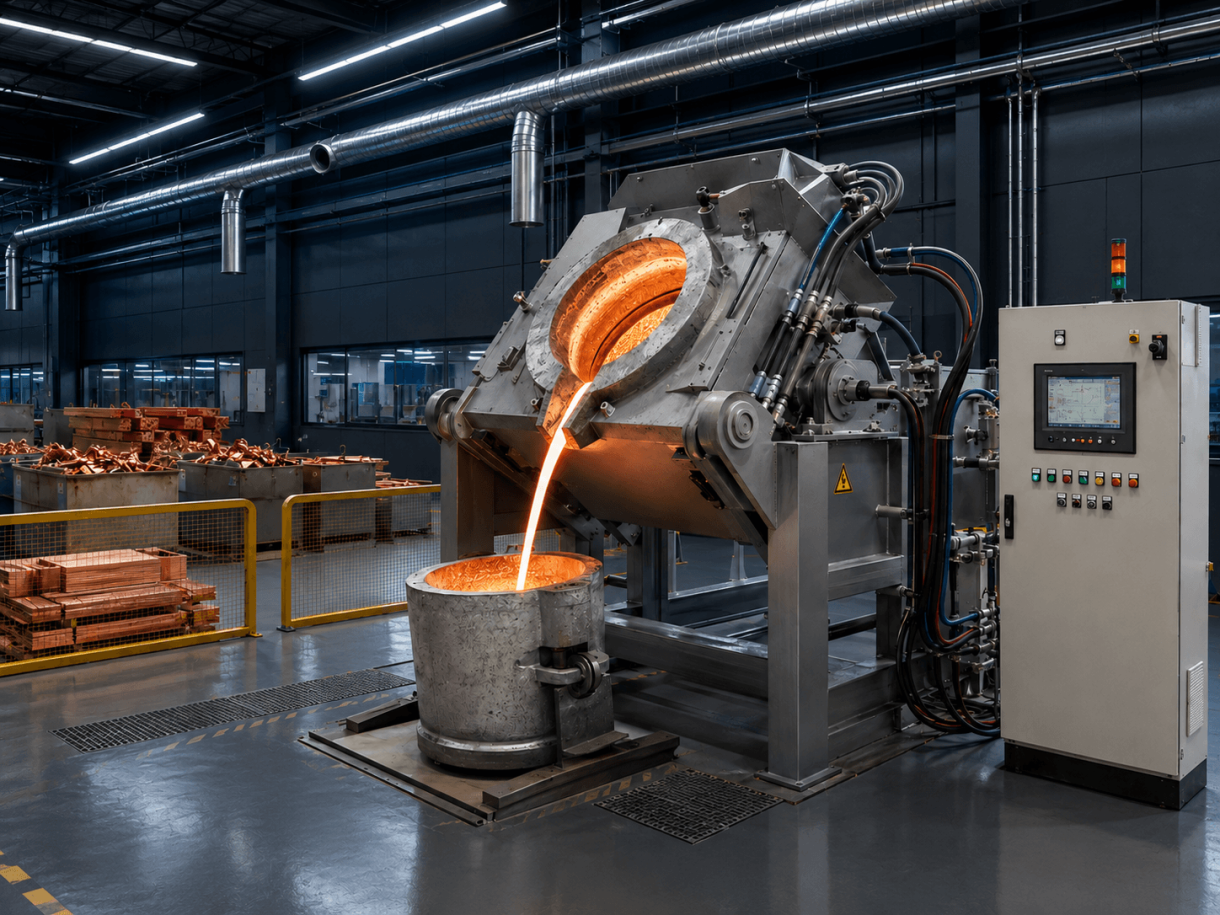
A copper melting furnace may appear simple from the outside: load the metal, apply heat, wait for it to melt, and pour it into a mold or casting system.
In actual production, however, the furnace influences far more than melting time. It affects energy consumption, metal loss, alloy consistency, casting quality, operator safety, maintenance costs, and the stability of the entire production line.
Copper melts at approximately 1,085°C, so the equipment must reliably operate above this temperature while controlling oxidation, heat loss, refractory wear, and molten-metal transfer.
Before selecting a copper melting furnace, buyers should answer seven practical questions. These questions help turn a general machinery inquiry into a realistic technical proposal.
The first question is not about furnace capacity. It is about the charge material.
A manufacturer using clean copper cathodes or high-purity copper ingots has different process requirements from a recycling plant handling copper scrap, production returns, busbars, wire, brass, or bronze.
The supplier should know:
Clean, dense material usually heats more predictably. Lightweight or contaminated scrap may oxidize faster, generate more slag, and require sorting, cleaning, preheating, or refining.
Brass and bronze also require different process control from pure copper. Zinc-containing brass, for example, should not be treated as if it were pure copper because excessive temperature and holding time may change the alloy composition.
Clearly defining the raw material allows the supplier to recommend an appropriate furnace type, crucible, refractory, power level, and process.
Furnace specifications may refer to batch capacity, holding capacity, or hourly melting rate. These figures describe different things.
Batch capacity is the amount of metal loaded for one melting cycle. Holding capacity is the amount of molten copper the furnace can contain. Melting rate indicates how much solid material can be converted into liquid metal within a certain period under specified conditions.
Actual production also includes:
A factory needing 500 kg of molten copper per hour should not automatically order a 500 kg furnace. The correct capacity depends on cycle time, operating hours, downstream demand, and whether production is batch-based or continuous.
An oversized copper melting furnace may waste energy during partial loads or long holding periods. An undersized furnace may delay casting equipment and force operators to run continuously without sufficient time for inspection and maintenance.
Buyers should provide both the required amount per batch and the required daily or hourly output.
Different heating methods offer different benefits.
An induction furnace generates heat through an electromagnetic field. Electrical currents induced inside the conductive metal produce rapid, controllable heating.
Potential advantages include:
Induction furnaces require adequate electrical capacity and a reliable cooling-water system. Buyers should confirm local voltage, frequency, transformer capacity, water quality, water temperature, pressure, and flow.
A gas-fired furnace may use natural gas, LPG, diesel, or another suitable fuel, depending on the burner design.
This solution can be practical where gas is readily available or electricity is limited or expensive. The complete project must consider combustion control, exhaust, ventilation, emissions, heat recovery, and local fuel regulations.
A crucible furnace keeps the molten metal inside a refractory or graphite crucible. It may be suitable for smaller batches, flexible alloy production, and foundry applications.
A tilting furnace pours by rotating the furnace body. Hydraulic, motorized, or manual tilting may be used according to the capacity. Controlled tilting can improve pouring accuracy and reduce manual handling, but the mechanism must be robust and protected against heat and metal splash.
The best furnace is not determined by heating speed alone. It must match the factory’s energy conditions, production schedule, material, and downstream process.
A copper melting furnace should be selected as part of a production line, not as an isolated machine.
Molten copper may be transferred to:
The downstream process determines the required pouring method, metal temperature, transfer distance, batch timing, and level control.
For example, a continuous casting line needs a stable supply of molten metal. Frequent interruptions or temperature fluctuations can affect casting speed, surface quality, and product consistency. In this case, separate melting and holding equipment may provide better process stability than a single batch furnace.
The supplier should understand the complete material flow, from solid charge to finished product.
Melting copper is not only about reaching the liquid state.
Excessive temperature, long holding time, atmospheric exposure, contaminated scrap, unsuitable crucibles, and poor operating practices can increase oxidation or introduce impurities.
Important process factors include:
Digital temperature measurement and automatic power regulation help maintain a stable process. Depending on the application, buyers may also require programmable recipes, data recording, alarm history, and interfaces with upstream or downstream equipment.
The required controls depend on the finished product. Copper used for electrical applications may have stricter conductivity, oxygen, and impurity requirements than decorative cast products.
A copper melting furnace operates with high temperatures, electrical power or combustible fuel, cooling water, hydraulic systems, and heavy molten metal.
The equipment should include safety measures appropriate to its design, such as:
Operators also need suitable protective clothing, dry tools, safe charge preparation, clear transfer routes, and documented emergency procedures.
Wet or sealed materials should never be introduced carelessly into molten metal. The factory must establish rules for material inspection, storage, drying, and charging.
Equipment safety and workplace procedures must be planned together.
The purchase price is only one part of the investment.
The long-term cost of a copper melting furnace includes:
When comparing quotations, ask suppliers to explain the operating assumptions behind claimed melting times or energy figures. Results can change significantly depending on charge temperature, material density, batch size, target pouring temperature, furnace condition, and operator practices.
The more useful calculation is the cost per ton of acceptable molten copper—not simply the machine price or maximum power rating.
To obtain an accurate proposal, provide:
Photographs of the raw material and a factory layout can further improve equipment selection.
Choosing a copper melting furnace requires a clear understanding of the complete production process. Raw material, capacity, energy supply, metal quality, casting method, safety, and operating cost all influence the final configuration.
A technically suitable furnace should provide more than enough heat. It should deliver molten copper at the required temperature, quality, volume, and time—without creating unnecessary energy consumption, metal loss, maintenance, or safety risks.
PINMI Group works with international buyers to evaluate copper-processing projects and develop practical equipment solutions. Send us your raw material, production capacity, power conditions, required temperature, downstream process, and factory layout. Our team can use this information to help you evaluate a suitable copper melting furnace configuration and prepare a tailored technical proposal.
Company
August 2026 · 8 min read
Company
August 2026 · 8 min read
Company
August 2026 · 8 min read
Event
August 2026 · 7 min read

Share your capacity, raw material and site conditions — we'll come back with a process route, equipment selection and a turnkey path to production.


No.310–311 National Road, Quanshan District, Xuzhou City, China