
Pinmi
Get a Quote
Pinmi
August 2026 · 8 min read
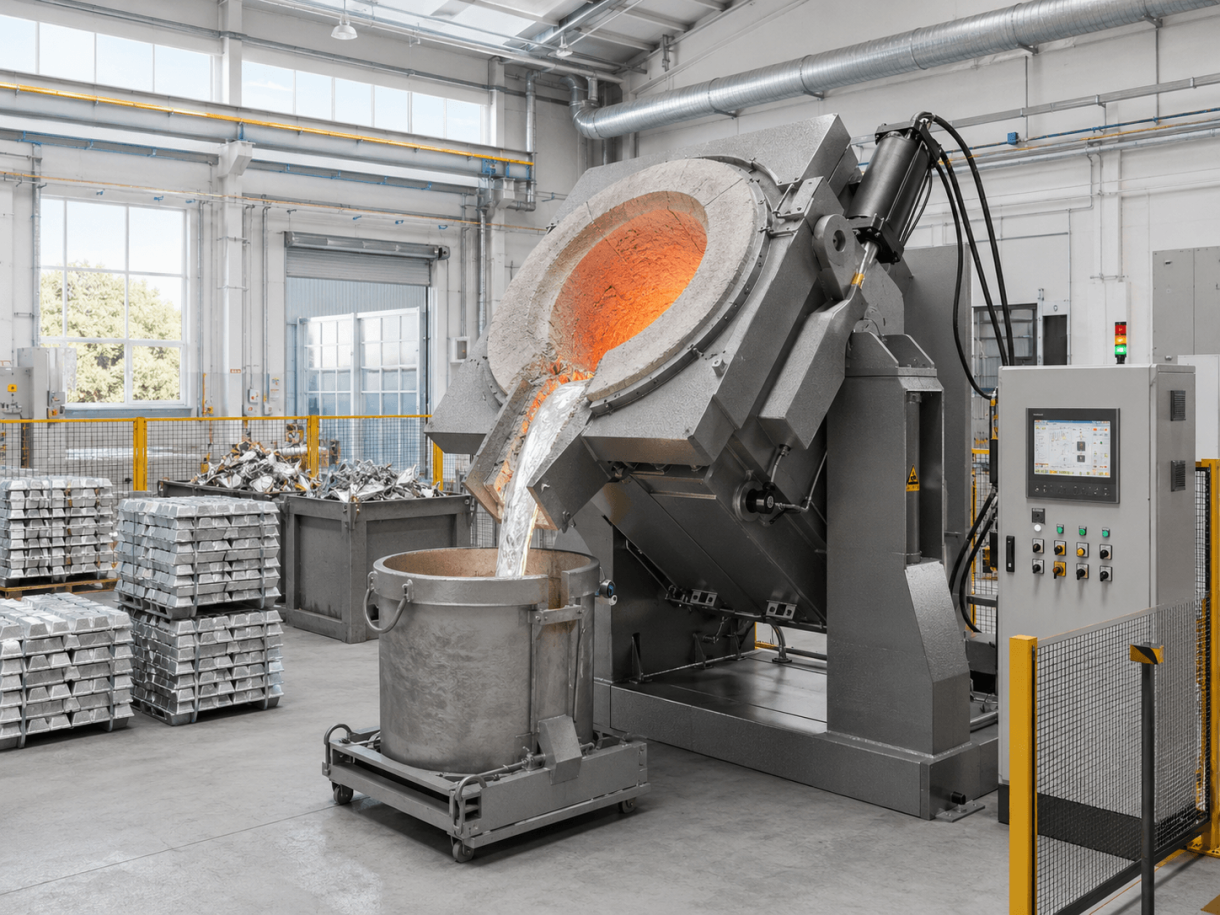
Two aluminum foundries can purchase furnaces with the same nominal melting capacity and achieve very different results.
One plant maintains a predictable metal supply, stable temperature, manageable fuel consumption, and low dross generation. The other struggles with long melting cycles, excessive heat loss, inconsistent melt quality, frequent maintenance, and operators waiting for metal.
The difference is rarely explained by capacity alone.
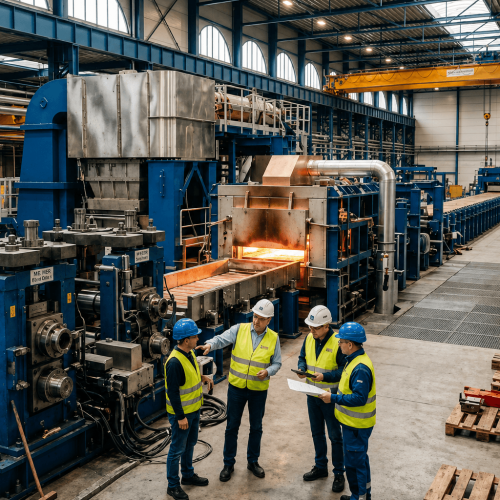
An aluminum melting furnace must fit the complete production process: the charge material, required output, alloy changes, casting schedule, energy supply, operator workflow, environmental requirements, and future expansion plan.
This is why choosing the right furnace should begin with production data—not only with a supplier’s price list.
Before discussing furnace size, define exactly what will be melted.
A factory processing clean primary aluminum ingots has different requirements from a recycling plant charging mixed scrap, returns, runners, rejected castings, or lightweight aluminum chips. Charge density, contamination, surface area, moisture, coatings, and alloy composition all affect melting efficiency and metal recovery.
Clean, dense material generally transfers heat more predictably. Thin or contaminated scrap can oxidize quickly, create more dross, and require additional preparation or refining.
Buyers should provide the furnace supplier with information such as:
Without this information, an aluminum melting furnace may be technically capable of melting aluminum but poorly matched to the actual factory.
A furnace may be described by holding capacity, batch capacity, or melting rate. These figures are not interchangeable.
Holding capacity tells you how much molten metal the furnace can contain. Batch capacity describes the amount processed in one cycle. Melting rate indicates how much solid aluminum can theoretically be converted into liquid metal within a specified period.
Usable output also depends on:
A foundry that needs a continuous supply of molten aluminum should evaluate the complete operating cycle. This includes charging, melting, refining, skimming, temperature adjustment, transferring, cleaning, and preparing the furnace for the next cycle.
Selecting equipment only by the largest advertised capacity can create an oversized, inefficient system. Choosing a furnace that is too small can cause production delays and force the equipment to operate continuously at its limits.
There is no single furnace design that is best for every aluminum plant.
A crucible furnace melts aluminum inside a removable or fixed crucible. It is often selected for smaller production volumes, frequent alloy changes, prototyping, and flexible batch operation.
Its relatively simple layout can be convenient for small and medium-sized foundries. However, crucible condition must be monitored carefully because damage, contamination, or improper handling can affect safety and metal quality.
A tilting aluminum melting furnace discharges molten metal by rotating the furnace body. Controlled tilting can make pouring or transfer more convenient and reduce manual ladling.
This design can be suitable when a factory requires controlled metal transfer to a holding furnace, ladle, casting machine, or mold line. Buyers should evaluate the tilting mechanism, hydraulic system, pouring accuracy, emergency controls, and maintenance access.
A reverberatory furnace heats the aluminum mainly through radiation and convection from the furnace chamber. It is commonly used in medium- and large-scale melting or recycling operations.
The large chamber can accept bulky charge materials, but furnace design, burner efficiency, insulation, door operation, and exhaust management strongly influence energy use and metal loss.
An induction furnace uses electromagnetic energy to generate heat within the metal charge. It offers clean operation, accurate temperature control, and no direct contact between the metal and a combustion flame.
Electricity availability and cost, required capacity, charge characteristics, and local infrastructure should be evaluated before choosing induction technology.
The purchase price is visible once. Energy loss appears on every production shift.
Heat escapes through the furnace shell, doors, exhaust, openings, damaged refractory, and unnecessary holding time. Frequent door opening allows hot gases to leave while cold air enters the chamber. Poorly fitted lids or worn insulation can further increase consumption.
When evaluating an aluminum melting furnace, ask about:
The cheapest furnace can become expensive when it consumes more fuel or electricity for every ton of aluminum produced.
Instead of requesting only a general energy figure, ask the supplier to state the assumed raw material, initial charge temperature, output temperature, production rate, and operating conditions behind the calculation.
When molten aluminum is exposed to oxygen, part of the metal forms oxide. This oxide, together with trapped aluminum and contaminants, becomes dross.
Some dross formation is unavoidable, but excessive turbulence, overheating, long holding periods, dirty scrap, improper charging, and poor furnace operation can increase metal loss.
Reducing dross begins with good process design:
A furnace that melts quickly but generates excessive dross may not provide the best overall metal yield. For this reason, buyers should consider recovered metal per ton of charge, not only melting speed.
Consistent temperature is critical to casting stability.
If the melt is too cold, it may not flow or fill the mold correctly. If it is overheated, oxidation, hydrogen absorption, refractory wear, and energy consumption can increase. Temperature variation between different areas of the bath can also affect process consistency.
A modern aluminum melting furnace should provide reliable temperature measurement and controllable heat input. Depending on the application, useful control features may include:
Automation should not make routine work unnecessarily complicated. The control system should help operators understand furnace conditions and respond quickly to abnormal situations.
Molten aluminum and moisture are a dangerous combination. Wet scrap, sealed containers, inappropriate tools, or water entering molten metal can cause violent reactions.
A safe project requires more than emergency buttons on the furnace. The complete installation should consider:
Local fire, gas, electrical, emissions, and occupational safety regulations should be reviewed during the planning stage—not after the machine reaches the factory.
To receive a meaningful proposal, prepare the following project information:
These details allow the supplier to recommend a furnace based on the production process rather than guessing from a single capacity number.
A better comparison considers the total cost of producing one ton of acceptable molten aluminum.
That calculation includes energy, metal loss, labor, consumables, refractory life, crucible replacement, maintenance, production interruptions, and environmental-control costs.
A more efficient aluminum melting furnace may require a higher initial investment but provide a better return through lower energy use, improved metal recovery, predictable production, and reduced downtime.
The right furnace is not necessarily the largest, most automated, or least expensive option. It is the furnace that matches the charge material, output demand, alloy schedule, utility conditions, casting process, and workforce.
PINMI Group supports international buyers in evaluating aluminum processing requirements and developing practical equipment configurations. If you are planning a new melting plant or upgrading an existing foundry, send us your raw material, required capacity, energy conditions, operating schedule, and factory layout.
With complete project information, our team can help you evaluate a suitable aluminum melting furnace solution and prepare a technical proposal for your production goals.
Company
August 2026 · 8 min read
Company
August 2026 · 8 min read
Company
August 2026 · 8 min read
Event
August 2026 · 7 min read

Share your capacity, raw material and site conditions — we'll come back with a process route, equipment selection and a turnkey path to production.


No.310–311 National Road, Quanshan District, Xuzhou City, China